Pipelines
Port Melbourne, VIC
01 / Challenge
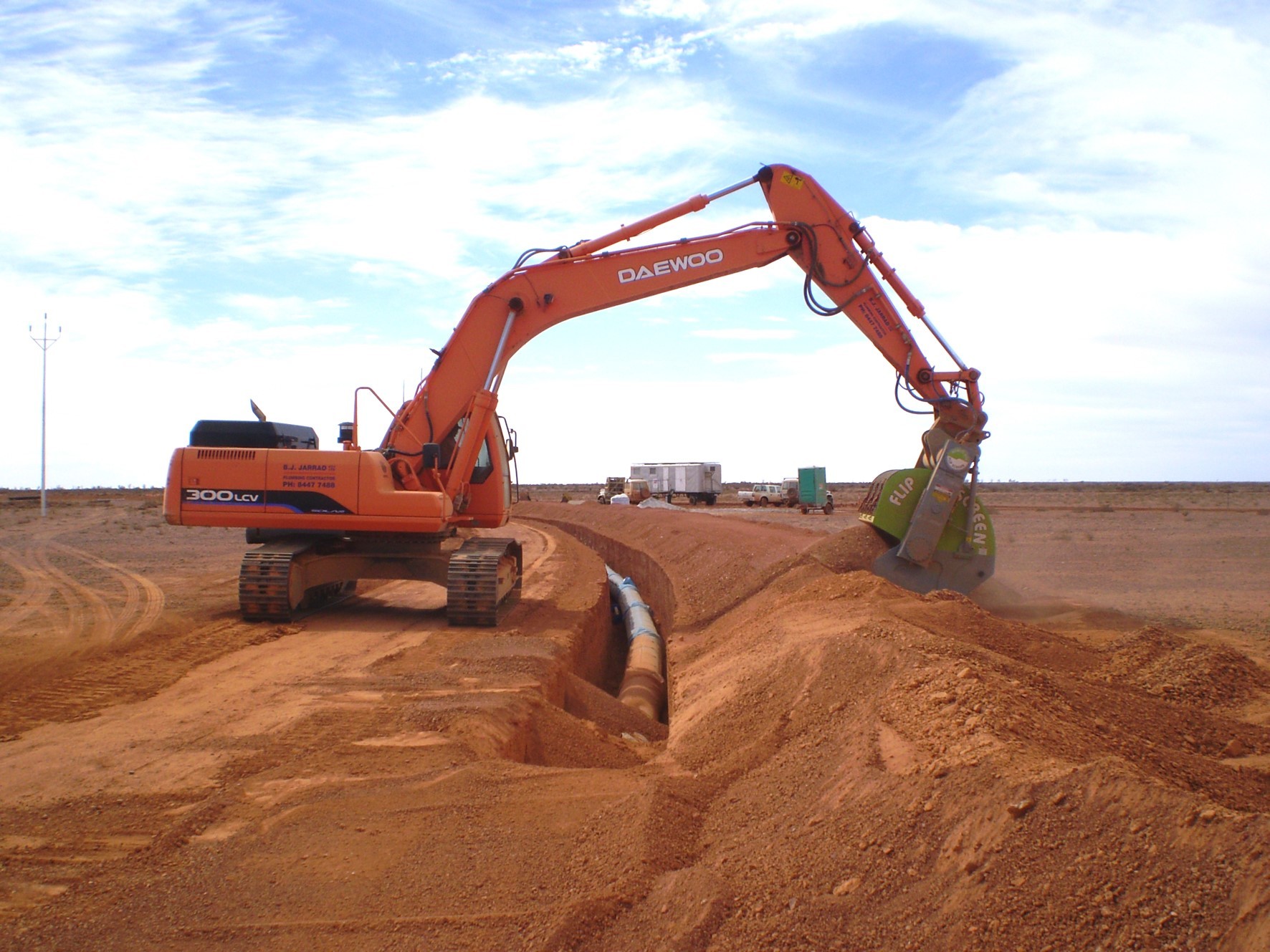
Installing underground pipelines through dense urban areas creates a constant stream of excavated trench spoil. On many projects this material is removed from site while clean bedding sand is delivered separately for pipe installation. JHL Civil encountered this situation while working on service infrastructure in Port Melbourne, where space was limited and truck movements needed to be carefully managed. Much of the excavated material already contained fine sand suitable for pipe bedding if it could be separated from rocks and debris. However, processing the material traditionally would require fixed screening equipment or offsite handling. The team needed a way to quickly produce consistent bedding material within the trenching workflow itself.
02 / Solution
JHL Civil introduced a FlipScreen WL130 screening bucket to operate alongside the excavator during trenching works. As spoil was removed from the trench, it was placed directly into the rotating screening bucket. The screening mesh allowed fine sand and soil to fall through while larger stones and debris were retained. This produced a consistent, fine bedding material suitable for laying and supporting pipe sections. Because the FlipScreen travels with the excavator, screening could occur directly beside the trench without interrupting the pipe installation process. Operators could also change mesh sizes quickly if the project required different grades of material.
03 / Result
The introduction of the FlipScreen allowed JHL Civil to convert excavated spoil into a valuable construction resource. Bedding sand produced from screened trench material was reused immediately during pipeline installation, eliminating the need for large volumes of imported material. Truck movements to remove spoil were also significantly reduced, improving site safety and lowering transport costs. The ability to process spoil beside the trench helped streamline the installation sequence, keeping crews and machinery working continuously. The result was faster project delivery, improved material efficiency and a simpler approach to managing trench spoil on pipeline projects.
PUT FLIPSCREEN TO WORK ON YOUR SITE
Inspired by this result? Explore the FlipScreen range and find a screening bucket to match your machine and the work ahead.
Explore Products ↗