Railway
Ingleside, NSW
01 / Challenge
Rick Davis Contracting undertakes civil and rail corridor works where large quantities of excavated material must be managed efficiently. Much of this material included road base and railway ballast mixed with soil, fines and debris during excavation. Although the aggregate itself remained structurally sound, separating it using traditional methods was difficult. Material was often removed from site for processing or disposal while fresh aggregates were brought back in for construction activities. This approach increased trucking requirements, raised project costs and slowed progress on tight civil work schedules. The company needed a practical way to recover and reuse these aggregates directly onsite without interrupting the pace of construction works.
02 / Solution
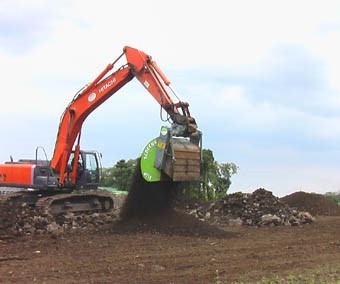
Rick Davis Contracting equipped its machinery with a FlipScreen E80 screening bucket to process excavated material immediately as work progressed. Operators could load mixed spoil directly into the bucket, allowing fines and soil to pass through the screening mesh while larger aggregates such as road base and ballast remained separated. Interchangeable screening panels enabled the team to produce the correct aggregate size depending on project requirements. Because the attachment moved with the excavator or loader, screening could occur exactly where material was dug up, eliminating the need to stockpile material or transport it elsewhere for processing.
03 / Result
Using the FlipScreen allowed Rick Davis Contracting to transform excavated spoil into a usable construction resource. Clean road base and ballast could be immediately returned to the project, reducing the need to import new materials and lowering overall construction costs. Truck movements and waste disposal were also significantly reduced, helping streamline site logistics. Operators reported that screening during excavation kept work zones organised and prevented large stockpiles from building up. The result was a more efficient material cycle across the project, where valuable aggregates were recovered, reused and kept working within the job rather than leaving the site as waste.
PUT FLIPSCREEN TO WORK ON YOUR SITE
Inspired by this result? Explore the FlipScreen range and find a screening bucket to match your machine and the work ahead.
Explore Products ↗