Waste Management
Wagga Wagga, Australia
01 / Challenge
Gregadoo Landfill required an efficient method to manage increasing waste volumes while improving resource recovery outcomes. Materials such as green waste mulch, street sweepings, crushed concrete, glass and manure were arriving with varying contamination levels and inconsistent sizing. Disposal costs were rising, with landfill tipping costs around $160 per tonne, and valuable material was being lost. The council needed a system capable of processing multiple waste streams, reducing contamination, producing saleable products and minimising direct landfill disposal. Seasonal fluctuations, weather conditions and accumulation of stockpiled material added further complexity, requiring flexible screening capabilities across different materials and applications.
02 / Solution
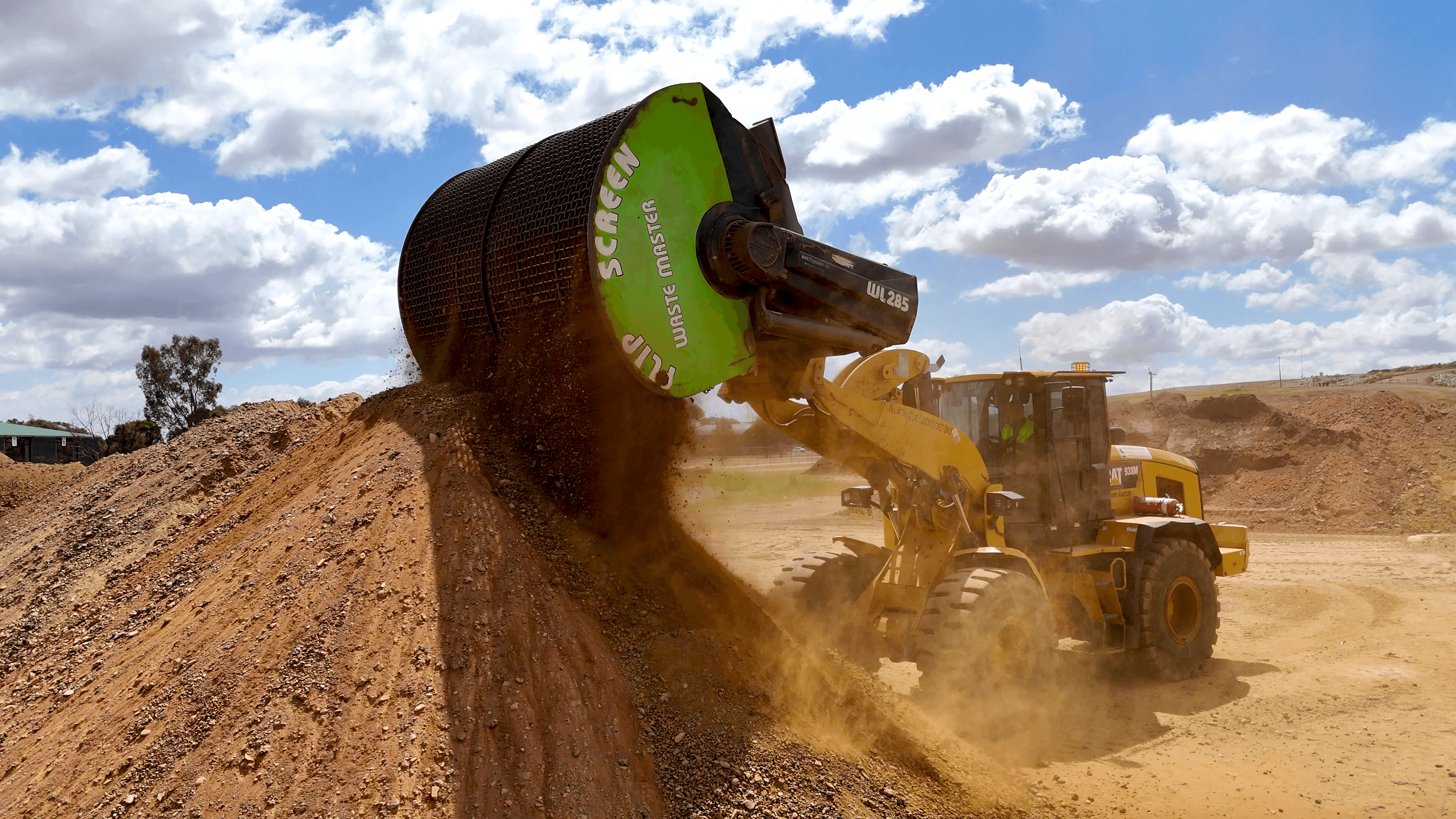
FlipScreen’s Waste Master model - equipped with multiple screen sizes was implemented to process various waste streams directly on site. Green waste was screened after shredding to produce uniform mulch suitable for sale. Street sweepings were dual screened to remove large contaminants and recover clean aggregate. Concrete and rubble were screened after crushing to create reusable grades for internal road and hardstand applications. Glass screening removed contamination for recycling, while manure and soil were processed into free-flowing soil enhancer material. The FlipScreen allowed adaptable screening across applications, improving waste stream control while enabling efficient separation without additional processing stages.
03 / Result
The FlipScreen system enabled the council to divert significant volumes from landfill while creating usable and saleable materials. Clean mulch products generated revenue and reduced disposal costs, while recovered aggregates were reused internally, lowering material purchase requirements. Screening improved contamination control and compliance outcomes, supported recycling initiatives and reduced environmental impact. The flexible system allowed multiple applications including rehabilitation works and soil enhancement, helping transform waste streams into valuable resources and improving overall landfill operational efficiency.
PUT FLIPSCREEN TO WORK ON YOUR SITE
Inspired by this result? Explore the FlipScreen range and find a screening bucket to match your machine and the work ahead.
Explore Products ↗